WalkingPad P1 Reviews: See Why 0 Shoppers Rated It 0 Stars!
Before that checkout click, hear from 0 who tried the WalkingPad P1 treadmill firsthand. The average? 0/5 — but the opinions? Juicy.
 Supermod
  Moderator
 Recaptor
 WalkingPad P1 review: compact walking for busy spaces
Under-desk treadmills are having a moment, mostly because they make movement possible during long hours on calls or keyboards. The WalkingPad P1 is built for that use case, not marathon training, and it shows its intent with a low profile and foldable deck. In short, it promises simple walking at gentle speeds with basic safety certifications and a footprint that slides under a couch. The question is whether those promises line up with its measurable data and everyday value.
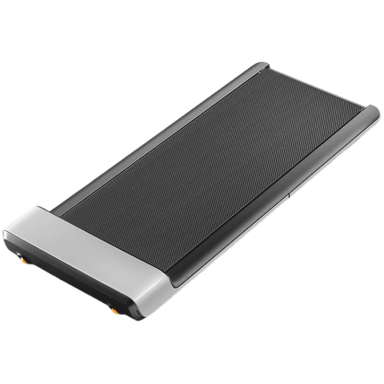
At its core, the P1 is an under desk treadmill that folds in half and tucks away. You’re looking at a residential-grade device meant for home or office use, with a modest build and no console tower to crowd your space. The first impression from the spec sheet is a product optimized for convenience over high performance. That being said, the numbers are consistent with what matters for workday walking and light activity.
Detailed Specs & Features
According to the published specs, the model is identified as WPP1F and ships primarily in gray or pink, targeting global markets. The body measures 56.37 by 21.5 by 5 inches and weighs 62 lb, which is light enough to move on built-in wheels yet sturdy enough to feel planted. On paper, its fold mechanism reduces the length to 32.5 inches, so storage under a bed or beside a desk becomes practical for small apartments. The overall package weight is listed at 68 lb, underscoring that a single person can manage setup with care.
For the walking surface, the P1 offers a 16.5-inch width and a 47.24-inch length, which we’ll translate in practical terms shortly. The deck and belt use a simple one-ply design with a medium shock absorption profile, which is aligned with low-impact walking but not intense training. There are no incline or decline mechanics; zero percent grade keeps things predictable and quiet. In real-world terms, that means fewer moving parts and potentially lower maintenance needs over time.
The motor is a 1.5 HP peak DC unit with fan cooling, designed for steady walking rather than sprints. Top speed peaks at 3.75 mph, while the floor starts at a gentle 0.5 mph for cautious starts or typing while walking. The brand calls it “continuous duty,” which in this class typically means it can handle extended sessions at low intensity without overheating. This is the right thrust for productivity walking, where cadence stays easy.
Connectivity sticks to the basics: Wi-Fi is supported and the companion experience is through KS Fit. Bluetooth isn’t the focus, and there’s no media stack like speakers or a tablet rest. Based on its engineering data, the treadmill tracks essentials such as speed, time, distance, calories, and steps, which is sufficient for casual fitness logs. For many desk users, quiet, predictable operation matters more than entertainment.
Safety and compliance are notable: the P1 lists CE, UL, and FCC certifications with an emergency stop and unattended auto-stop. There’s also a Prop 65 warning, which is common for products containing certain materials in California. While there isn’t a traditional safety clip, the low deck height and controlled speeds help reduce risk. It’s a straightforward feature set that prioritizes reliable shutoff behavior over advanced sensors.
User Experience & Performance (Based on Specs)
Design & Build
At 5 inches tall, the P1’s chassis is deliberately slim to avoid toe stubs and to fit under furniture when folded. The frame is listed as aluminum, which helps explain the 62 lb weight without sacrificing too much rigidity. Transport wheels and a soft-drop fold simplify moving it between rooms without straining your back. For users with limited space, the 32.5-inch folded length is the winning dimension that turns a treadmill from “always in the way” into “use, fold, forget.”
Performance
In daily use, the 0.5 to 3.75 mph range hits the sweet spot for desk walking and brisk strolls. Most people will hover around 1.5 to 2.2 mph while typing, then bump to 3+ mph for short wellness breaks. The 1.5 HP peak motor and basic shock absorption should keep vibration modest on flat floors; mechanically, lower speed and one-ply belts typically translate to lower heat and noise. While there’s no published decibel figure, the absence of incline gears and the simple drive system favor quieter operation than a full-size treadmill.
Console / Display / Audio
There isn’t a touch console or media hub here, which is actually a plus if you want to keep distractions down. The feedback is basic—speed, time, distance, calories, steps—which is adequate for goal tracking and habit building. If you want structured training, you’ll need to create your own intervals with the app or simply nudge speed up and down manually. The takeaway is that simplicity reduces points of failure and sustains a clean, minimalist workflow.
Extra Features
Convenience features are intentionally sparse: no cup holders, device shelves, or fans. What stands out instead is the foldability, soft-drop mechanism, and transport wheels, which collectively reduce friction between intent and action. The light maintenance requirement—manual lubrication and simple belt care—should keep ownership costs and effort down. In short, the feature set is curated to support habit consistency rather than gadget collecting.
Capacity, Sizing, and Fit
The rated limit is a 220 lb weight capacity, which is typical in this category. The 16.5-inch width is fine for straight-line walking, though wide stances or heavy pronation may feel constrained. The 47.24-inch length gives average-height users reasonable fore-aft margin at 2 to 3 mph; taller users should keep stride conservative. If you’re over 6 feet tall or prefer long strides, consider that a compact deck encourages a shorter, more mindful gait.
Power, Setup, and Home Compatibility
Power is standard household current via a 110-volt supply, pulling up to a listed 746 watts at peak. The plug is NEMA 5-15 and the brand recommends a 15A circuit, which aligns with typical US outlets. Assembly is effectively plug-and-play, with tools not required and an estimated 10 minutes to readiness. For apartments, the compact size, light weight, and certification set support a frictionless, compliant setup.
Pros & Cons
Pros
- Compact folding design with 32.5-inch folded length simplifies storage in small homes and offices.
- Quiet, simple drivetrain with 1.5 HP peak motor favors low-noise walking and low maintenance.
- Certified safety (CE/UL/FCC) and auto-stop behavior add peace of mind for shared or home environments.
- Reasonable price for a residential walking unit with app tracking and essential metrics.
Cons
- Narrow 16.5-inch deck may feel tight for broader gaits or taller users at faster walking speeds.
- No incline and limited top speed cap training variety and calorie burn for fitness-focused buyers.
Price & Value for Money
Current pricing places the P1 around $349 direct, which is competitive for a foldable walking deck with certifications and a companion app. Given its one-year warranty coverage across motor, frame, deck, parts, and labor, the value proposition is fair for light daily use. If you primarily want steady-state steps during meetings, the numbers align with expectations and cost. For transparency, here is the most relevant live retailer listing: $349 at WalkingPad.com.
Quick Take
If we look at the numbers alone, the P1 is a purpose-built walking platform that balances storage, safety, and simplicity. It’s not designed for running or interval work, but it excels at making movement compatible with work. In short, you get quiet steps, a small footprint, and low-maintenance ownership.
Closing Recommendation
For remote workers, students, and anyone who wants to walk during emails and calls, the P1 may be ideal. It appears to perform best for light, frequent sessions at 0.8 to 2.5 mph, where the deck size and motor are most at ease. Users seeking speed training or incline challenges should consider a larger treadmill, but the P1 helps desk-bound users achieve more daily steps with fewer barriers.
Verdict
Rating: Based on the specifications and overall feature set, we believe WalkingPad P1 deserves 4.2 out of 5.
- Winner Feature → Foldable, low-profile chassis with certified safety that fits real apartments and shared spaces.
- Needs Improvement → Narrow deck and no incline limit training variety for taller or fitness-focused users.
Reviews 0
The good, the bad, and the brutally honest.Average Rating


More Treadmills 179
Unlock more awesome finds.